October 7, 2023, is a date imbued in the collective memory of the world. On October 7, 2023, the militia known as Hamas launched an unexpected attack on Southern Israel, taking hostages and causing significant casualties. Israel did not hesitate when it came to responding and launched a large-scale military operation with the stated intent of dismantling Hamas. Ever since, the Israel-Palestine conflict has dominated global headlines. Though the attacks on October 7 took the world by surprise, they did not come out of nowhere. The conflict between Israel and Palestine is a struggle over land, religion, and self-determination centuries in the making. To understand the current conflict, an understanding of both the Israeli and Palestinian people and their shared claim to the same homeland is imperative.
Background
On November 29, 1947, the UN General Assembly Adopted Resolution No.181. The purpose of this resolution was to create a new Israeli state in the historic land that Israelis claim a 3,000-year historic and religious right to. The resolution was driven by the rise of the movement of Zionism, which sought a homeland for the Jewish people. After the Holocaust, the creation of a Jewish state was seen as a matter of survival. This land that was to be given to the Jewish people, however, was already populated. This land was a part of the state of Palestine, which was at that time under British rule. Despite Palestine as well as neighboring Arab states opposing the idea, the plan moved forward to separate Palestine into two separate Jewish and Arab states, with Jerusalem, a holy city in both people’s religions, being a neutral area. One day after Israel declared independence, Arab states in the region opposed to the creation of the Israeli state intervened, starting the first Arab-Israeli war. This war ended with the victory of Israel and the displacement of 750,000 Palestinians. Following this war, there were decades of continued fighting and conflict between Israel and neighboring Arab states. In 1967, Israel officially began to occupy the West Bank, an area officially belonging to Palestine, although it is now functionally part of Israel. The conflict is fueled by this competing claim to land, with both nations considering a narrow strip of land between the Mediterranean Sea and the Jordan River to be their homeland.
October 7: The Facts
On the morning of October 7, 2023, Hamas launched “Operation Al-Aqsa Flood,” a massive surprise attack on southern Israel. Hamas fighters fired rockets into southern Israel and stormed Israeli communities, killing over 1,300 people, including both military personnel and civilians, as well as taking hundreds of hostages. That same day, the military commander of the Hamas Al-Qassam Brigades declared a military operation against Israel in response to “ongoing Israeli crimes against the Palestinian people.” One day later, Israel formally declared war. Despite the shock of the attack, it didn’t happen randomly. Historians and political analysts point to several factors that have been simmering for years: Since 2007, Gaza has been under a strict blockade by Israel and Egypt. By 2023, the economic situation was dire, with 70% of families dependent on aid and electricity available for only a few hours a day.
Human Rights Violations in the Israeli-Palestinian Conflict
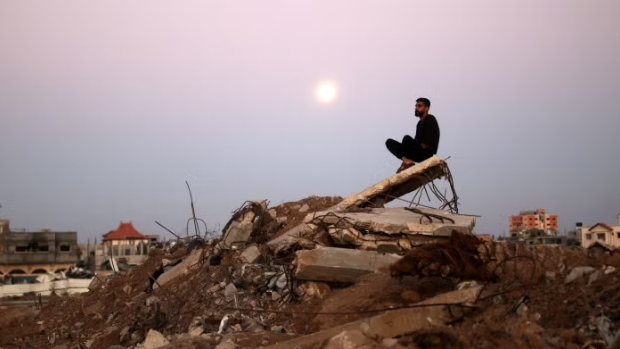
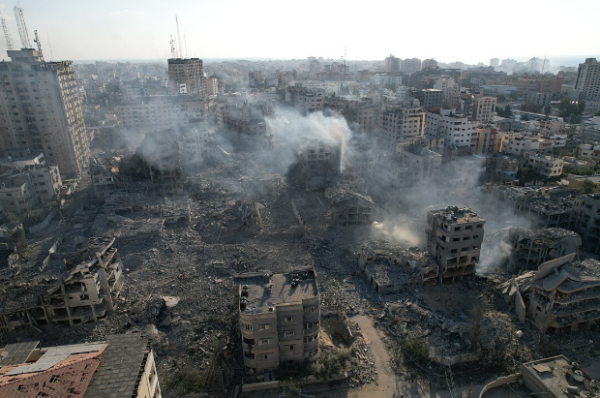
Since the beginning of the war, a primary concern has been the human rights violations, particularly those committed by Israel. Some of the violations that have occurred include the excessive use of military force, particularly in areas such as the Gaza Strip and the occupied West Bank. Criticism of the Israeli military has arisen from its allegedly exceeding limits of proportionality established by the Rome Statute of the International Criminal Court, which provides the legal basis for prosecuting war crimes. To accomplish their objective of dismantling Hamas, Israeli forces have attacked areas densely populated by civilians, and the war has resulted in over 70,000 Gazan deaths. Since the beginning of the war, there have been many reports of Israel targeting locations such as civilian buildings, schools, and hospitals. Israel justifies this by claiming Hamas uses such locations for military purposes, such as storing weapons. At least 94% of Gaza’s hospitals have been damaged or destroyed, and Israel’s two-month total blockade of humanitarian aid has resulted in famine-like conditions. In August 2025, 1.9 million Gazans were displaced and experiencing either acute or catastrophic food shortages.
Can Peace Be Found in 2026?
As of May 2026, the question of whether peace can be found rests largely on the success of a ceasefire agreement negotiated in October 2025, as the first part of a twenty-point peace framework aiming to end the war. Unresolved disputes over borders, the rights of Palestinian refugees to return to occupied territories, and the legal status of Jerusalem are among many issues hindering the establishment of peaceful coexistence between the two states. Additionally, since the ceasefire was negotiated, both Israel and Hamas have traded accusations of violations of the ceasefire, resulting in disputes that have caused over two hundred casualties. Despite this, the agreement has largely held. Currently, the peace negotiated between the two sides is precarious, but if the peace plan works, it could lead to the end of a bloody war.
Sources:
“Israel-Palestine Conflict: A Retrospective Analysis from Origins to the Present Day and Prospects for the Future.” Journal-Uamd.org, 2025, www.journal-uamd.org/index.php/IJRD/article/view/542/502.
“War Crimes within the Framework of International Humanitarian Law and the Rome Statute: An Analytical Study of Israel-Palestine Conflict.” Usm.ac.id, 2026, journals.usm.ac.id/index.php/jic/article/view/13106/6912.
Center for Preventive Action. “Israeli-Palestinian Conflict.” Global Conflict Tracker, Council on Foreign Relations, 31 Mar. 2025, www.cfr.org/global-conflict-tracker/conflict/israeli-palestinian-conflict.
Adams, Paul. “What Does Recognising a Palestinian State Mean?” BBC, 30 July 2025, www.bbc.com/news/articles/cvgp5z1vvj5o.
Human Rights Watch. “World Report 2025: Rights Trends in Israel and Palestine.” Human Rights Watch, 16 Jan. 2025, www.hrw.org/world-report/2025/country-chapters/israel-and-palestine.
“Israeli-Palestinian Conflict: A Reflection of Our Times – Emmaüs International.” Emmaüs International, 17 Oct. 2023, www.emmaus-international.org/en/news/israeli-palestinian-conflict-a-reflection-of-our-times/.