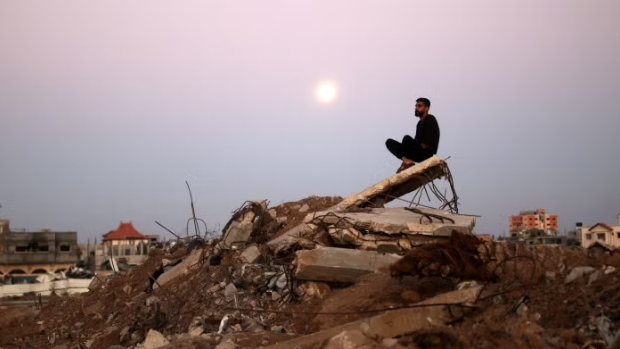
For nearly 3 years, a civil war has been raging in the country of Sudan. The nation of Sudan is strategically located between the Middle East and the Horn of Africa. Additionally, Sudan is home to over 60% of the Nile River Basin, which acts as a critical source of water and agricultural land, and is located along the coast of the Red Sea, providing access to the sea line through which nearly 10% of global trade passes. Despite the importance of Sudan’s location and the fact that it is one of the largest countries on the continent of Africa, the current civil war is receiving minimal global attention. Why is this the case? One factor is the convoluted nature of the conflict, making it difficult to summarize into short news stories that the average person has time to read. So how did this civil war originate?
How did this begin?
To understand how this civil war began, you must first understand Sudan’s history. The multinational Sudan is no stranger to civil war. Beginning in 1899, Sudan was officially under joint British-Egyptian rule, but was effectively administered as a British colony. Although Sudan gained independence in 1956, the legacy of colonialism helped to fuel many future conflicts. While governing Sudan through indirect rule, the British manufactured tribal and religious divides, and the effects are still felt today. The First Sudanese Civil War, fought between the north and south, began in 1955 and lasted until 1972. The Second Civil War, fought from 1983 to 2005, was largely a continuation of the first and resulted in the independence of South Sudan as a separate country in 2011. In 1989, Colonel Omar Al-Bashir carried out a military coup that resulted in him appointing himself as president in 1993. In 2003, another war broke out in Darfur, a region of Sudan, in which 2 rebel groups claimed the government oppressed Darfur’s non-Arab population, and the government responded with an ethnic cleansing of non-Arabs in the area. This fighting lasted until 2020. In these 3 wars alone, 1.8 million people are estimated to have been killed. By 2019, people were protesting in the streets for the removal of President Al-Bashir. The army chief of Sudan, Abdel Fattah al-Burhan, the leader of the Sudanese Armed Forces (SAF), and Mohamed Hamdan “Hemedti” Dagalo, leader of the powerful paramilitary group the Rapid Support Forces (RSF), worked together to overthrow Al-Bashir. They had agreed to share power, but disputes eventually led to a complete civil war, beginning on April 15, 2023, fought between the SAF and the RSF. However, this current conflict is about more than just a power struggle between two opposing militias. Due to Sudan’s strategic location, many foreign countries also have a stake in the fighting, including the UAE, Saudi Arabia, Egypt, and Russia.
What is happening right now?
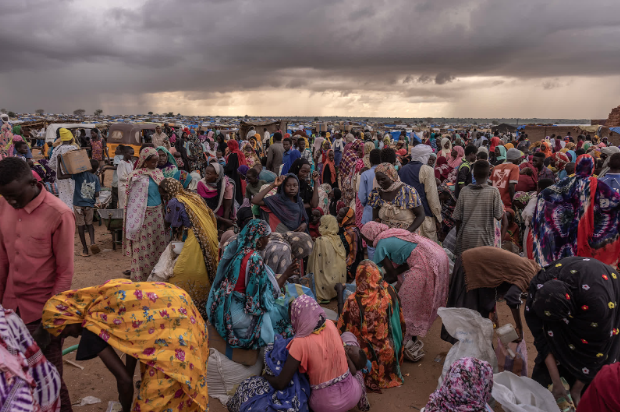
Currently, Sudan is suffering the largest humanitarian crisis in the world. Even before the war had begun, there were already 15.8 million people in need of aid. This number has only skyrocketed. The war has displaced over 12 million people and left another 33.7 million desperately in need of aid. The war has caused civilians to suffer through frequent attacks and human rights violations. Famine is spreading over Sudan due to conflict, and over 635,000 people are at daily risk of starvation. There are currently more people in Sudan living in famine conditions than the rest of the world combined. Over 70% of the countrys’ hospitals have been destroyed, causing millions of people to not be able to access essential medical care. Women and girls are in great danger of experiencing gender-based violence, with the number of people at risk tripling over the last few years. There is no end in sight, as both the RSF and SAF, as well as the countries backing them, profit from the war, with gold flowing out of the country being used to fund it. Because of this, both parties have little incentive to attempt diplomacy.
Why haven’t you heard about it?
If you were previously unaware of the civil war in Sudan, you’re not alone. According to a YouGov survey taken in 2023, near the beginning of the conflict, only 6% of Americans reported understanding the war very well. As many as 31% said they didn’t understand the civil war at all. Since the survey was taken, the civil war has grown into the greatest current humanitarian crisis, yet awareness does not seem to have increased by much, if at all. So why do hardly any Americans seem to understand this event? While there are many factors, the most important is the lack of media coverage. While there are some stories about Sudan, they are not on the front page, and not much awareness is brought to them. The media is already oversupplied with conflicts to report about, such as those in Iran, Ukraine, and Palestine.
So what can you do to help the people of Sudan? While it may feel as though there is not much to be done, one of the most important things any individual can do is to spread awareness. While it may seem insignificant, one reason this conflict has lasted so long is a lack of global attention. While there are charities aiding in the humanitarian crisis, the people of Sudan require more support. Spreading awareness can lead to an increase in desperately needed donations, increased pressure on governments to take action, and bring attention to the plight of the Sudanese people.
Sources:
Rothbart, Daniel, et al. “Sudan at War With Itself: Civilian Devastation in the Civil War.” Conflict Resolution Quarterly, Dec. 2025, https://doi.org/10.1002/crq.70014.
Sarker, Trapa. View of Battle Over Power Usurpation: Mapping the Sudan Civil War Through the Conflict Wheel Model. www.arssjournal.org/index.php/arss/article/view/4362/7643.
“Daily Survey: Foreign Conflicts.” Daily Survey: Foreign Conflicts, report, 1, p. 1. d3nkl3psvxxpe9.cloudfront.net/documents/Foreign_Conflicts_poll_results.pdf.
Irc. “Crisis in Sudan: What Is Happening and How to Help.” Crisis in Sudan: What Is Happening and How to Help, 2 Mar. 2026, www.rescue.org/article/crisis-sudan-what-happening-and-how-help.
Action, Center for Preventive. “Civil War in Sudan.” Global Conflict Tracker, 18 Feb. 2026, www.cfr.org/global-conflict-tracker/conflict/power-struggle-sudan.
Galaleldeen, Abdalla. “The Sudanese Identity in the Mirror of Colonial and PostIndependence History.” The Journal of Social Encounters, 2025, digitalcommons.csbsju.edu/cgi/viewcontent.cgi?article=1377&context=social_encounters.
Ferragamo, Mariel. “Crisis in Sudan: War, Famine, and a Failing Global Response.” Council on Foreign Relations, 19 Sept. 2024, www.cfr.org/photo-essay/crisis-sudan-war-famine-and-failing-global-response#:~:text=Sudan%20is%20facing%20a%20humanitarian%20crisis.%20The,attention**%20*%20**Erosion%20of%20international%20humanitarian%20norms.
Kendrick, Jessica. “The Severe Humanitarian Crisis in Sudan — Lifting Hands International.” Lifting Hands International, 5 Feb. 2025, www.lhi.org/stories/2024/8/22/the-crisis-in-sudan.